
Magnesium Bisglycinate vs Magnesium Oxide: Which Form Your Body Actually Absorbs
Not all magnesium forms are equal. Discover why bisglycinate's superior absorption rates make it worth the extra cost over cheaper magnesium oxide.
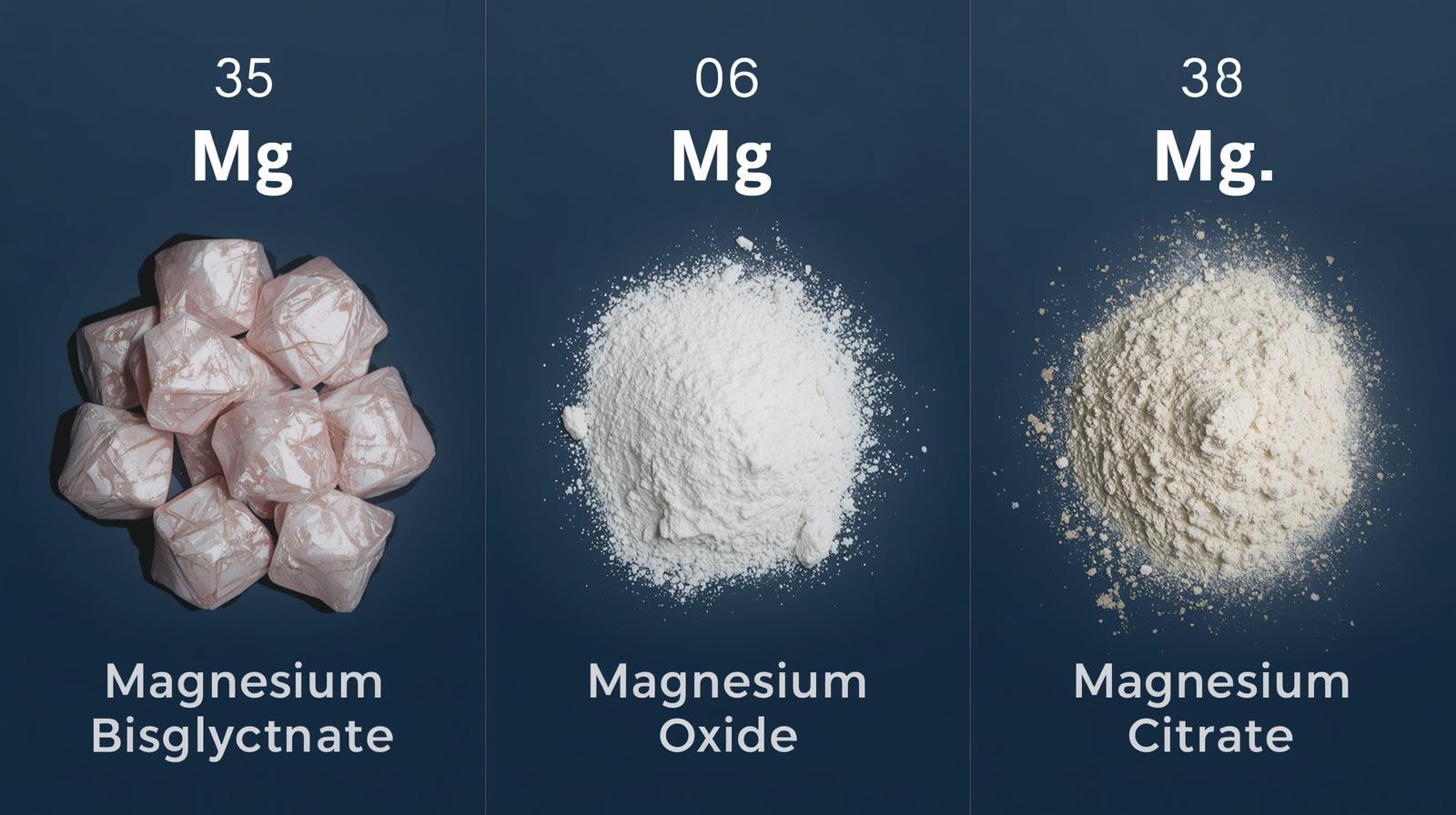
If you’ve ever stood in the supplement aisle staring at rows of magnesium bottles, you’ve likely noticed the confusing array of forms available. Magnesium bisglycinate, magnesium oxide, magnesium citrate—the list goes on. While they all contain this essential mineral, your body treats them quite differently. Understanding these differences could mean the gap between actually addressing a deficiency and simply creating expensive urine.
The Bioavailability Battle: Why Form Matters
Not all magnesium supplements are created equal, and the form you choose dramatically affects how much your body can actually use. Research consistently shows that bioavailability—the amount that reaches your bloodstream—varies significantly between different magnesium compounds.
Magnesium bisglycinate, a chelated form where magnesium is bound to the amino acid glycine, typically demonstrates superior absorption rates compared to magnesium oxide. Studies suggest that chelated forms like bisglycinate can achieve absorption rates of 20-30%, while magnesium oxide—despite being one of the most common and cheapest forms—typically shows absorption rates of just 4-10%.
This difference comes down to how your digestive system processes these compounds. Chelated magnesium forms are essentially “pre-digested”—the mineral is already bound to an amino acid that your body recognises and can easily transport across intestinal walls. Magnesium oxide, on the other hand, must first be broken down by stomach acid before the magnesium can be absorbed, and this process is often incomplete.
Digestive Tolerance: The Comfort Factor
Beyond absorption rates, the two forms differ significantly in their digestive impact. Magnesium oxide is notorious for causing digestive upset, particularly loose stools or diarrhea. This isn’t necessarily a defect—it’s actually how magnesium oxide works as a laxative. The poorly absorbed magnesium draws water into the intestines through osmotic action.
Magnesium bisglycinate, by contrast, tends to be much gentler on the digestive system. The chelation process not only improves absorption but also reduces the osmotic effect that causes digestive distress. Research suggests that people taking bisglycinate forms report fewer gastrointestinal side effects, making it more suitable for long-term supplementation.
This tolerance difference is particularly important if you’re looking to take magnesium consistently. A supplement that causes uncomfortable digestive effects is unlikely to become part of your regular routine, regardless of its potential benefits.
Elemental Magnesium: Getting What You Pay For
Here’s where things get interesting from a practical standpoint. When comparing supplements, you need to look beyond the total weight of the compound to the actual elemental magnesium content—the amount of pure magnesium you’re getting.
Magnesium oxide contains about 60% elemental magnesium by weight, making it the most concentrated form available. A 400mg magnesium oxide tablet provides roughly 240mg of elemental magnesium. Magnesium bisglycinate, however, contains only about 14-18% elemental magnesium by weight. The same 400mg would provide just 56-72mg of elemental magnesium.
This might initially seem like a point in favour of magnesium oxide, but remember the absorption rates. If you absorb 25% of the magnesium from bisglycinate versus 5% from oxide, you might actually get more usable magnesium from the seemingly “weaker” bisglycinate form. It’s a classic case of quality over quantity.
Specific Applications: Matching Form to Function
Different magnesium forms may be better suited to particular health goals, though research in this area is still developing. The choice between bisglycinate and oxide might depend on what you’re hoping to achieve.
For sleep support, magnesium bisglycinate offers a potential double benefit. Not only does magnesium traditionally support muscle relaxation and nervous system function, but the glycine component has its own research suggesting it may support sleep quality. Some studies indicate that glycine can help lower core body temperature and promote deeper sleep phases.
For occasional constipation relief, magnesium oxide’s poorly absorbed, water-drawing properties become a feature rather than a bug. This is why magnesium oxide is commonly used in over-the-counter laxatives. However, this isn’t suitable for daily magnesium supplementation.
For general magnesium support—addressing muscle cramps, supporting energy metabolism, or maintaining adequate levels—bisglycinate’s superior absorption and gentler profile typically make it the more practical choice for consistent use.
Cost Considerations and UK Availability
In the UK, both forms are readily available, though there’s a significant price difference. Magnesium oxide is considerably cheaper per dose, partly due to its high elemental magnesium content and simple manufacturing process. Magnesium bisglycinate commands a premium price, reflecting both the more complex chelation process and smaller tablet quantities needed.
When calculating cost-effectiveness, consider the absorption rates alongside the price per milligram of elemental magnesium. A cheaper supplement that’s poorly absorbed may not represent better value than a more expensive, well-absorbed form. This calculation becomes even more important if you’re planning long-term supplementation.
UK retailers, both online and high street, stock various brands of both forms. Look for products that clearly state the elemental magnesium content and have third-party testing certificates, particularly for bisglycinate forms where quality can vary between manufacturers.
How to Use These Forms Effectively
If you choose magnesium bisglycinate, typical dosing ranges from 200-400mg of elemental magnesium daily, usually divided into two doses taken with meals. The enhanced absorption means you may need lower doses compared to other forms. Start with a lower dose to assess tolerance, even though digestive issues are less common.
For magnesium oxide, if you’re using it for general supplementation rather than as a laxative, take it with food to minimise digestive upset and potentially improve absorption slightly. However, be prepared that you may need higher doses to achieve similar results to bisglycinate, which somewhat negates the cost advantage.
Timing can matter too. Many people find taking magnesium in the evening supports relaxation, though this isn’t essential for absorption. Avoid taking magnesium supplements with calcium, as they can compete for absorption, and be mindful of interactions with certain medications.
The evidence suggests that for most people seeking consistent magnesium supplementation, bisglycinate offers a compelling combination of superior absorption, better tolerance, and practical convenience. While magnesium oxide has its place—particularly for occasional digestive support—it’s rarely the best choice for addressing magnesium deficiency or supporting long-term wellness goals. Your wallet might prefer oxide’s lower price, but your body will likely thank you for choosing bisglycinate.
_This article is for informational purposes only and should not replace professional medical advice. Always consult with a healthcare provider before starting new supplements, particularly if you have existing health conditions or take medications. Magnesium supplements may interact with certain medications and are not suitable for everyone._
Group Forums
Discuss these articles by joining a Group
Latest Posts






Plantz is owned by Million Media Ltd, a registered UK company number: 15476153
Info
Membership
Notices
- Terms & Conditions
- Delivery Terms
- Privacy Policy
- Publishing Principles