
Passionflower vs Valerian: Which Herbal Sedative Has Better Evidence for Anxiety?
Compare the research behind passionflower vs valerian for anxiety and sleep. Discover which herbal sedative works better for your specific needs.
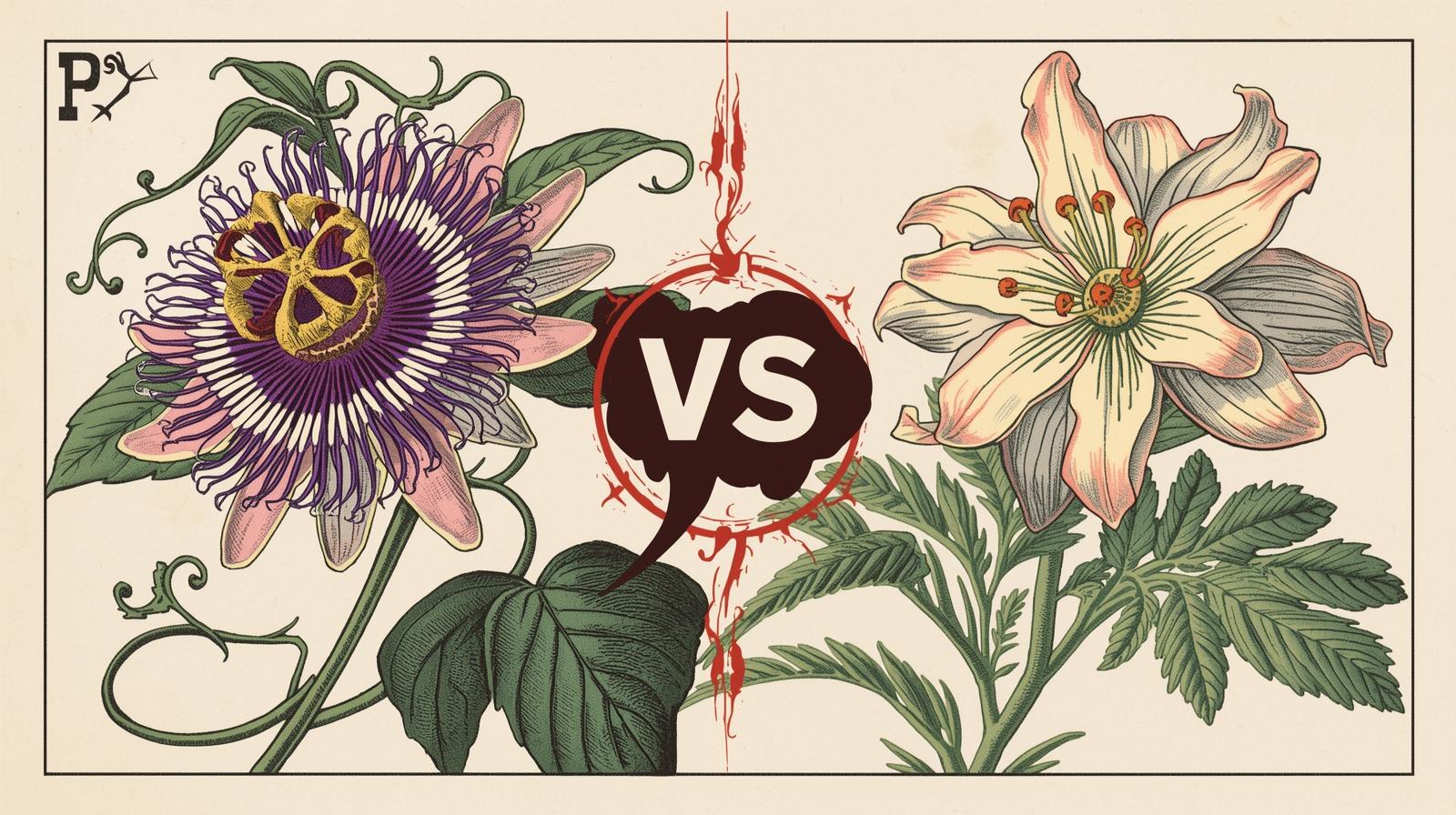
You’ve likely heard someone mention passionflower tea for “calming the nerves” or seen valerian supplements promising better sleep. Both herbs have earned reputations as gentle alternatives to pharmaceutical sedatives, but which one actually delivers on the research front? The answer, as it turns out, depends entirely on what you’re trying to achieve.
The Chemistry Behind Calm
Passionflower (_Passiflora incarnata_) and valerian (_Valeriana officinalis_) work through distinctly different pathways in your nervous system, which explains why they excel at different tasks. Passionflower’s calming effects primarily stem from flavonoids, particularly chrysin, which appears to modulate GABA-A receptors in the brain. GABA is your nervous system’s natural “brake pedal” – when these receptors are activated, anxiety signals quiet down.
Valerian, meanwhile, works through a more complex mechanism involving the breakdown of GABA itself. Its active compounds, including valerenic acid, may inhibit an enzyme that breaks down GABA, allowing this calming neurotransmitter to stick around longer. This difference in action helps explain why valerian tends to be more sedating overall, whilst passionflower offers anxiety relief without the same drowsy effects.
Where Passionflower Shines: The Pre-Surgery Evidence
The strongest clinical evidence for passionflower comes from studies on pre-surgical anxiety – that specific type of acute nervousness that builds before medical procedures. A well-designed clinical trial found that passionflower extract was as effective as oxazepam (a benzodiazepine medication) at reducing anxiety before surgery, but without causing the same level of sedation or memory impairment.
Research suggests that 500-750mg of standardised passionflower extract, taken 90 minutes before a stressful event, may significantly reduce anxiety levels. What’s particularly interesting is that participants reported feeling calmer without feeling drowsy – a crucial distinction if you need to remain alert during the day.
Additional studies have explored passionflower for generalised anxiety, with some promising results. A small but rigorous trial found that passionflower extract performed comparably to pharmaceutical anxiety medications over a four-week period, though more large-scale studies would strengthen this evidence base.
Valerian’s Territory: Sleep and Sustained Sedation
Whilst passionflower targets anxiety specifically, valerian has built its reputation on sleep support. The research here is more extensive, with multiple studies suggesting that 300-600mg of valerian extract taken 30-60 minutes before bedtime may improve sleep quality and reduce the time it takes to fall asleep.
Valerian appears to work best for people who struggle with racing thoughts at bedtime rather than physical restlessness. Its GABA-enhancing effects create a gradual wind-down that can persist through the night, though this same quality makes it less suitable for daytime anxiety management.
The herb traditionally requires consistent use to show its full effects – many studies show the most significant improvements after two to four weeks of regular supplementation, rather than immediate results from a single dose.
The Combination Approach: Better Together?
Intriguingly, some research has explored using passionflower and valerian together, capitalising on their complementary mechanisms. A few small studies suggest that combining the two herbs may offer more comprehensive support for both anxiety and sleep quality than either herb alone.
The rationale makes sense: passionflower’s targeted anxiety relief during the day, combined with valerian’s deeper sedative effects at night, could address the full spectrum of stress-related sleep disturbances. However, the evidence for this combination approach remains preliminary, and it’s wise to start with one herb at a time to assess your individual response.
Forms and Dosages: What the Research Actually Used
The clinical trials that established passionflower’s anxiety benefits predominantly used standardised extracts rather than teas or tinctures. Most effective studies employed extracts standardised to contain 3.5-4% flavonoids, taken in doses of 500-750mg.
Passionflower tea, whilst pleasant and traditionally used, contains much lower concentrations of active compounds. If you’re specifically seeking the anxiety-reducing effects demonstrated in clinical trials, a standardised extract is more likely to deliver therapeutic levels.
Valerian research has similarly focused on standardised extracts, typically containing 0.3-0.8% valerenic acids. The effective dose range of 300-600mg reflects extract potency rather than raw herb weight – another reason why standardised preparations tend to be more reliable for therapeutic use.
Safety Profile: Generally Gentle, But Context Matters
Both herbs boast excellent safety profiles when used appropriately. Passionflower is generally well-tolerated with minimal side effects, though some people report mild dizziness or drowsiness at higher doses. It’s worth noting that passionflower may theoretically interact with sedative medications, potentially enhancing their effects.
Valerian shares this gentle safety profile but comes with a few more considerations. Some people experience a “paradoxical” stimulating effect from valerian, feeling more alert rather than sleepy. Additionally, valerian has a more documented interaction profile, potentially affecting medications metabolised by certain liver enzymes.
Both herbs should be used cautiously alongside prescription sedatives, antidepressants, or anti-anxiety medications. If you’re taking any pharmaceutical medications, consulting with a healthcare provider before adding herbal sedatives is sensible practice.
Practical Application: Choosing Your Approach
For acute anxiety situations – job interviews, medical appointments, or specific stressful events – passionflower’s rapid onset and non-sedating profile make it the more practical choice. The clinical evidence supports taking 500-750mg of standardised extract 60-90 minutes before the anticipated stress.
For sleep-related issues, particularly if your mind races at bedtime, valerian’s deeper sedative effects and sustained action align better with your needs. Starting with 300mg taken 30-60 minutes before sleep allows you to assess your individual response.
The choice between these herbal allies needn’t be permanent. Many people find that their needs shift with life circumstances – perhaps passionflower for a particularly stressful work period, then switching to valerian during times when sleep quality becomes the priority.
Disclaimer: This information is for educational purposes only and not intended as medical advice. Herbal remedies can interact with medications and aren’t suitable for everyone. Consult your GP or a qualified herbalist before starting any new supplement regimen, particularly if you have existing health conditions or take medications.
Group Forums
Discuss these articles by joining a Group
Latest Posts




Plantz is owned by Million Media Ltd, a registered UK company number: 15476153
Info
Membership
Notices
- Terms & Conditions
- Delivery Terms
- Privacy Policy
- Publishing Principles