
Turkey Tail Mushroom: Why Oncologists Are Paying Attention to a Fungus
Why oncologists are paying attention to turkey tail mushrooms: decades of clinical research in Japan reveals promising immune-supporting compounds.
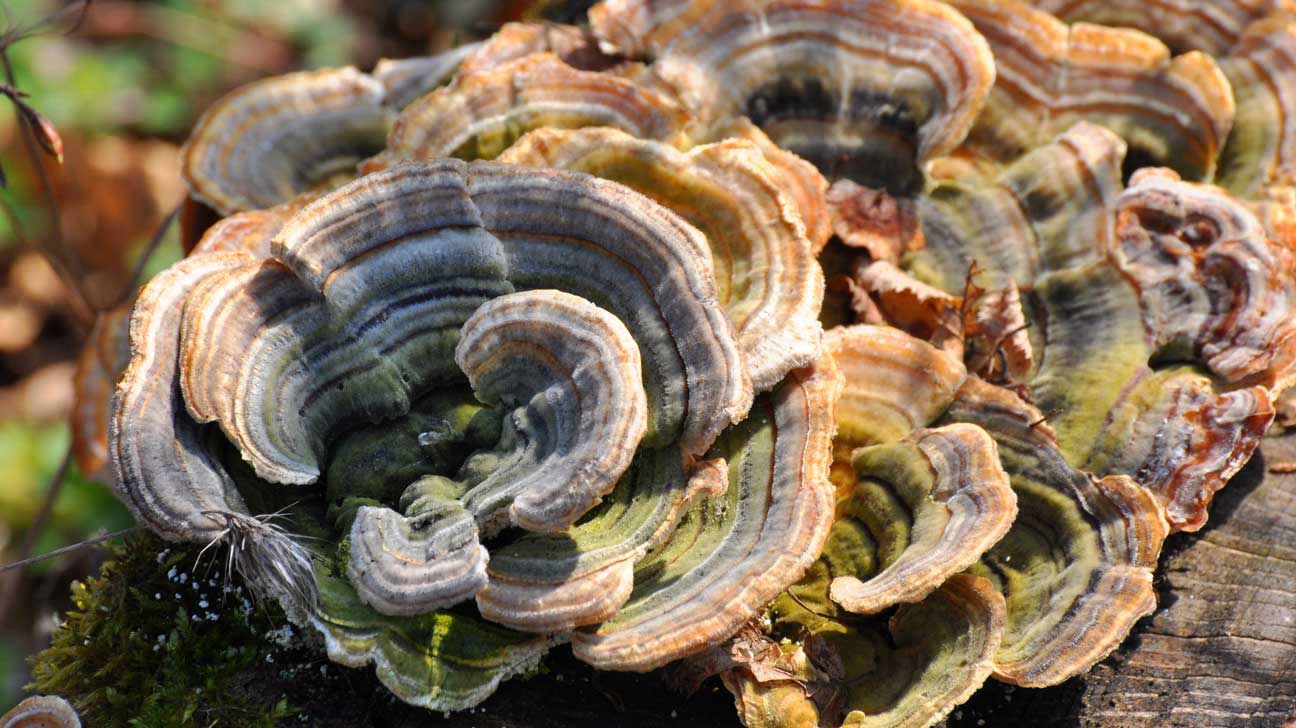
You’d be forgiven for walking past turkey tail mushrooms on your woodland stroll. These thin, fan-shaped fungi that sprout from decaying logs aren’t much to look at—striped in browns and greys like a wild turkey’s plumage. But beneath that unremarkable exterior lies something remarkable: compounds so promising that oncologists in Japan have been using them alongside conventional cancer treatments for nearly half a century.
What Makes Turkey Tail Different From Other Functional Mushrooms
While the wellness world is awash with mushroom supplements making bold claims, turkey tail (Trametes versicolor) stands apart with something most lack: serious clinical credentials. The difference lies in two specific compounds—PSK (polysaccharide-K) and PSP (polysaccharide-P)—that have undergone the kind of rigorous testing typically reserved for pharmaceutical drugs.
PSK, also known as Krestin, isn’t just another supplement ingredient. In Japan, it’s an approved prescription medicine that’s been used as an adjunct to conventional cancer treatment since 1977. This represents decades of clinical use backed by over 400 published studies—a level of evidence that puts turkey tail in a category of its own among functional fungi.
Research suggests these polysaccharides work by modulating the immune system rather than attacking cancer cells directly. They appear to enhance the activity of natural killer (NK) cells and T-lymphocytes—key players in our body’s immune surveillance system that help identify and eliminate abnormal cells.
The Japanese Clinical Experience
Japan’s approach to turkey tail began in the 1970s when researchers isolated PSK from the CM-101 strain of Trametes versicolor. What followed was extensive clinical testing that would make any supplement manufacturer envious. Multiple randomised controlled trials demonstrated that PSK, when used alongside conventional treatments, may support improved outcomes for patients with various cancers.
One landmark study published in The Lancet followed 262 patients with gastric cancer for five years. Those receiving PSK alongside standard treatment showed significantly better survival rates compared to those receiving standard treatment alone. Similar patterns emerged in studies of colorectal, lung, and breast cancers.
The mechanism appears to involve immune system enhancement rather than direct anti-cancer effects. PSK seems to help restore immune function that may be compromised by conventional treatments, potentially supporting the body’s natural ability to recognise and respond to abnormal cells. In Japan, PSK accounts for more than 25% of total national expenditure on anti-cancer agents—a testament to its integration into mainstream oncology.
Western Research Catches Up
While Japan was prescribing PSK, Western researchers remained largely unaware of turkey tail’s potential until recently. That changed when Paul Stamets, the mycologist whose own mother was battling breast cancer, brought turkey tail to the attention of American oncologists.
The result was a groundbreaking clinical trial funded by the National Institutes of Health (NIH)—the first federally funded study of a mushroom extract for cancer support in the United States. Led by Dr. Leanna Standish at Bastyr University, the phase I trial examined turkey tail’s effects on immune function in breast cancer patients who had completed conventional treatment.
The results, published in ISRN Oncology, were encouraging. Participants taking turkey tail extract showed dose-dependent improvements in immune cell counts, particularly lymphocytes and natural killer cells. Importantly, the extract was well-tolerated with minimal side effects—a crucial consideration for people whose immune systems may already be compromised.
This study has paved the way for larger phase II trials, marking turkey tail’s entry into evidence-based integrative oncology in the West. However, it’s crucial to understand that these studies position turkey tail as a potential immune supporter, not a cancer treatment.
Understanding the Immune Modulation Mechanism
What makes turkey tail particularly interesting to researchers is its apparent ability to modulate rather than simply stimulate the immune system. Unlike compounds that provide a blanket immune boost, turkey tail’s polysaccharides seem to help restore balance—enhancing immune function when it’s suppressed while potentially reducing excessive inflammation.
The key appears to lie in how PSK and PSP interact with immune cells. Research suggests these compounds bind to specific receptors on immune cells, triggering cascades that enhance the production and activity of various immune factors. Studies indicate they may increase the production of cytokines—chemical messengers that coordinate immune responses—while also supporting the maturation and activation of dendritic cells, which play a crucial role in immune surveillance.
Laboratory studies have shown that turkey tail extracts may enhance the cytotoxic activity of NK cells and promote T-helper cell responses. These effects could theoretically support the body’s natural ability to identify and respond to abnormal cells, though more human studies are needed to fully understand these mechanisms.
Quality Matters: Not All Turkey Tail Is Created Equal
The clinical research that has made oncologists take notice used specific, high-quality extracts—not the powder you might find in a basic supplement bottle. PSK is derived using hot water extraction from the fruiting bodies (the visible mushroom part) of specific strains of Trametes versicolor, then concentrated and standardised.
When considering turkey tail supplements, look for products that specify fruiting body extracts rather than mycelium (the root-like part grown on grain). The extraction method matters too—hot water extraction is necessary to make the beneficial polysaccharides bioavailable. Beta-glucan content is a useful quality marker, with clinical-grade extracts typically containing 20-30% beta-glucans.
Third-party testing for heavy metals and contaminants is essential, as mushrooms can concentrate pollutants from their growing environment. Reputable suppliers provide certificates of analysis showing the purity and potency of their extracts.
How to Use Turkey Tail Thoughtfully
If you’re considering turkey tail, approach it as you would any serious health intervention—with proper guidance and realistic expectations. The clinical research uses specific dosages, typically 1-3 grams daily of standardised extract, taken consistently over extended periods.
Turkey tail is generally well-tolerated, though some people may experience mild digestive upset initially. Starting with smaller doses and gradually increasing can help minimise this. As with any supplement, it’s wise to discuss turkey tail with your healthcare provider, particularly if you’re taking medications or managing health conditions.
Remember that turkey tail’s promise lies in immune support, not miracle cures. The Japanese clinical experience suggests it works best as part of a comprehensive approach to health, supporting the body’s natural processes rather than replacing conventional care.
Turkey tail’s journey from forest floor to pharmacy shelf represents something rare in the supplement world: the systematic validation of traditional use through rigorous science. While we’re still learning about its mechanisms and optimal applications, the existing evidence suggests this humble fungus deserves serious consideration from anyone interested in evidence-based immune support.
Disclaimer: This article is for educational purposes only and does not constitute medical advice. Turkey tail mushroom supplements are not intended to diagnose, treat, cure, or prevent any disease, including cancer. Always consult with qualified healthcare professionals before starting any new supplement, especially if you have health conditions or are taking medications.
Group Forums
Discuss these articles by joining a Group
Latest Posts





Plantz is owned by Million Media Ltd, a registered UK company number: 15476153
Info
Membership
Notices
- Terms & Conditions
- Delivery Terms
- Privacy Policy
- Publishing Principles